Collection fishing, What I'm reading

Anting-Anting Stories, And Other Strange Tales of the Filipinos

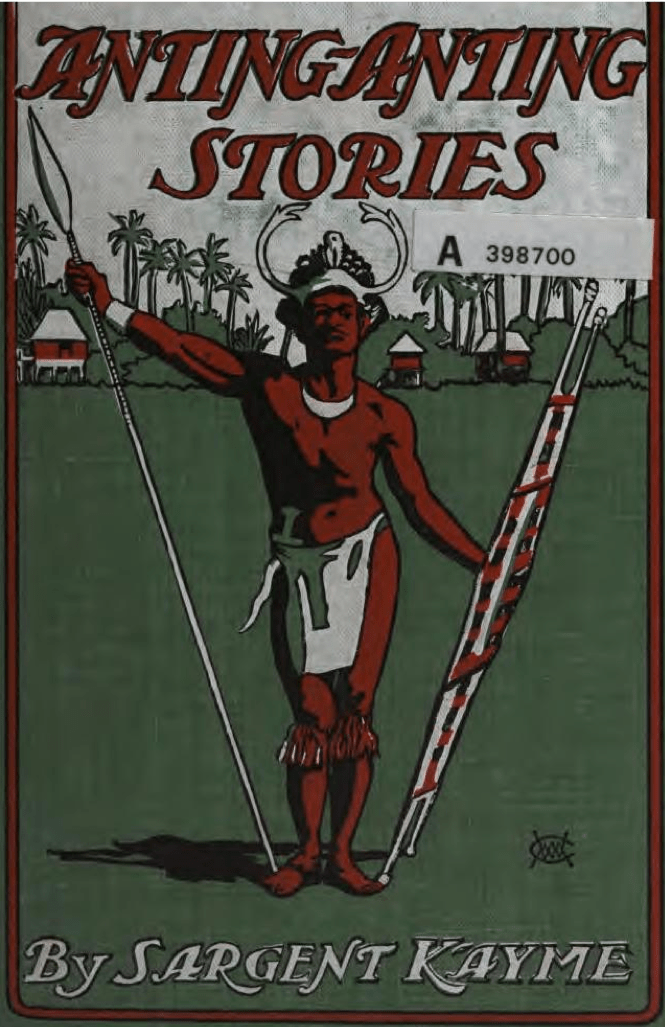
Newly digitised is this little treasure from the the library of the University of Michigan, Anting-anting stories: And other strange tales of the Filipinos (Boston: Small, Maynard & Company, 1901).

Anting-Anting Stories and other strange tales of the Filipinos

I once got a hold of this as a cheap-and-nasty print-on-demand edition but now it can be read in all its original glory. Far from a genuine collection of Filipino folklore, it’s mostly a Boy’s Own series of adventure stories featuring brave Americans holding their own against superstitious, cruel and ignorant savages. Published in 1901 during the Philippine-American war the unapologetic racism must have had some propaganda value back in the United States, though one story — Told at the Club — is much more sympathetic. I don’t know who ‘Sargent Kayme’ was, but the Michigan edition includes the handwritten annotation ‘pseud.’ after his name. There is enough detail to suggest that the author was reasonably familiar with the Philippines to be able to describe details such as local architecture and the appearance of port towns like Dumaguete, but not quite clued in enough to know that gorillas are not endemic to the islands, for example. The front cover looks like a pastiche of various nineteenth century archetypes of the ‘savage’ from Africa to Australia.

Standard
Collection fishing, Uncategorized, Writing systems

An alphabetic Cinderella

The Eskayan word for ‘alphabet’ is abadiha, generally spelled ‘abadeja’ following Hispanic orthographic rules. I analyse this  as a compound of four syllables ‘a’, ‘ba’, ‘di’ and ‘ha’. This is fairly typical way of forming words for ‘alphabet’. Consider the word alibata from the Arabic recitation order of ‘alif’, ‘ba’, ‘ta’, abakada from ‘a’, ‘ba’, ‘ka’, ‘da’, and even alphabet from ‘alpha’, ‘beta’.

But earlier this year Kristian Kabuay drew my attention to the story Abadeha: The Philippine Cinderella as a possible folkloric source for the Eskayan word. I found a copy at my local community library. Here is the frontispiece:

Abedeha_lower_res

de la Paz, Myrna J. 2001. Abadeha: The Philippine cinderella. Auburn, California: Shen’s Books.

Continue reading

Standard
What I'm reading

Sorcery songs to kill Hanson

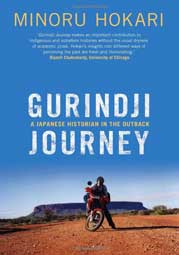
gurindji-journeyContinuing the Japan–Australia theme, I’m re-reading Minoru Hokari’s Gurindji Journey, ahead of the event To celebrate the life and work of Minoru Hokari 1971-2004 at the ANU.

I especially love Hokari’s radically pluralist approach to oral history and his persuasive but uncomfortable demand that “we need to question the politics of this act of ‘rescuing and being respectful of’ the Aboriginal experience.”

But quite apart from all that, here’s a fun excerpt (p85):

When I told them that Japanese ‘law’ became more Westernised, they sympathised with me and said, ‘Kartiya way everywhere.’ My Asian background certainly created a particular dynamic between the Gurindji people and me. Here is another example: one day, a young man approached me and asked if I knew Pauline Hanson. He explained that she does not like ‘my mob’ and ‘your mob’. Then, he suggested that I sing sorcery songs with him to kill Hanson.

Standard
Collection fishing

Aboriginal Australia seen from Japan in WWII

[Post updated 18/08/2014. See below]

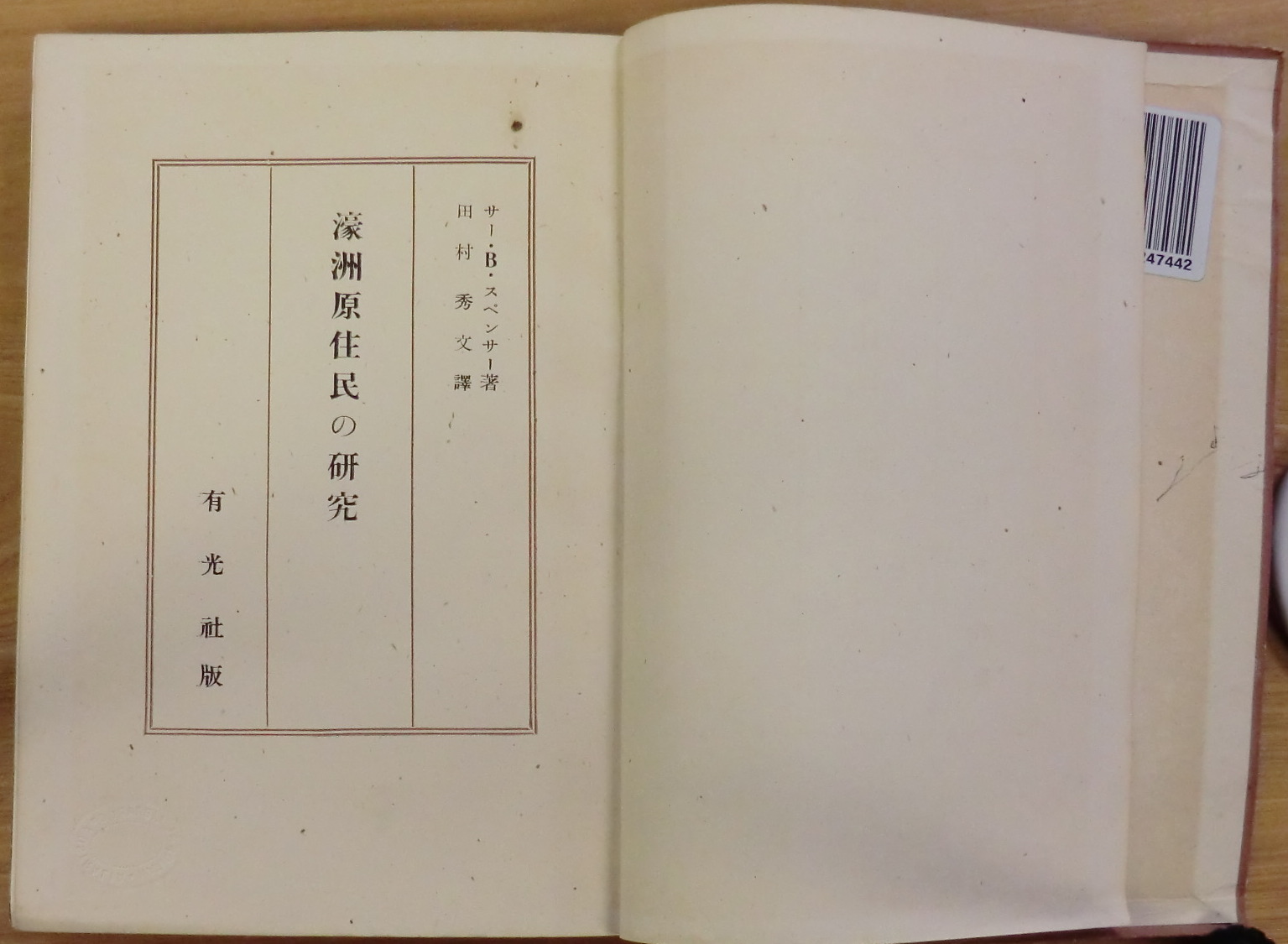
Discovered in the National Library of Australia, a 1943 edition of Baldwin Spencer’s 1928 Wanderings in wild Australia, abridged, translated into Japanese and published in Tokyo in 1943. This is the same year that the Imperial Japanese Air Force was bombing targets across the north of Australia. I would love to know more about this translation, how it came to be published, who was reading it and whether the publisher included any supplementary commentary from a Japanese perspective.

Spencer_Gillen-1943-p0-Title_page

Above is a photograph of the title page. The NLA catalog renders this as Goshu genjumin no kenkyo/ Sa B. Supensa cho, Tamura Hidebumi yaku. I’m assuming ‘B. Supensa’ is Baldwin Spencer and that Tamura Hidebumi is the translator. Continue reading

Standard
Collection fishing, Writing systems

Just how wrong-o is this Rongorongo board?

I came across this outstanding paleograph sitting quietly in a glass case in the Archeology and Anthropology building of my university. The quality of the image is somewhat reduced due to the fact that I was pressing my phone against the pain. The caption reads ‘Easter Island rongorongo board with approx5 500 glyphs, collected in 1870.’

2014-07-22 15.52.00

Easter Island rongorongo board with approx 500 glyphs, collected in 1870

According to the Wikipedia entry on Rongorongo, this artefact would represent one of only 26 known objects worldwide bearing a Rongorongo inscription. Considering that Easter Island may be the last place where writing was independently invented — after Central America, the Middle East and (perhaps) China — it’s remarkable that such a rare item is sitting casually amongst a collection of Austronesian and Southeast Asian sherds and flake tools.

Of course, the question of whether Rongorongo represents actual writing remains vexed as does the authenticity of many of the surviving artefacts. The meaning and traditional use of Rongorongo has tormented scholars from their earliest encounters with it.  By the time examples of Rongorongo were being collected for analysis, no literate Easter Islanders remained and the wooden texts were being used for fishing spindles or being burned as firewood. If Rongorongo is writing, as we know it, there is no consensus as to what kind of system it represents or whether the glyphs are merely mnemonics for the oral reproduction of ritual speech.

The date of 1870 suggests that this specimen was collected on the O’Higgins scientific expedition to the island in which the famous Rongorongo text I was obtained. I contacted the person responsible for maintaining the exhibit who then contacted the original collector, the archeologist Professor Peter Bellwood who gave the following succinct and highly informative reply:

“I bought it in Santiago in 1975. If it wasn’t a replica it would be worth millions, and certainly not in that glass case! It is probably made of plaster of Paris – not to be dropped.”

Mystery solved.


Standard
Uncategorized

Nagcodeswitching tayo

I’ve been paying attention to reports of columnist Jessica Zafra’s collapse and recovery. The most recent news is that she is expecting to be discharged from hospital. What attracted my attention in the latest account, is how normal Taglish codeswitching has become in Filipino media, at least in quoted speech. I’ve read many Filipino newspapers from the 1960s through to the 1990s and never seen anything like this:

Pelicano said Zafra’s condition has gotten better since she was admitted to the MMC before dawn on May 27.

“She’s responding well, nakakausap na siya ng maayos, nagrerespond siya sa mga questions ng attending physicians,” Pelicano said.

I love it! It suggests to me that Taglish codeswitching is in the process of becoming an accepted part of written discourse. I expect the next logical development for Filipino news media will be the introduction of codeswitching in non-reported speech.

Standard
Collection fishing

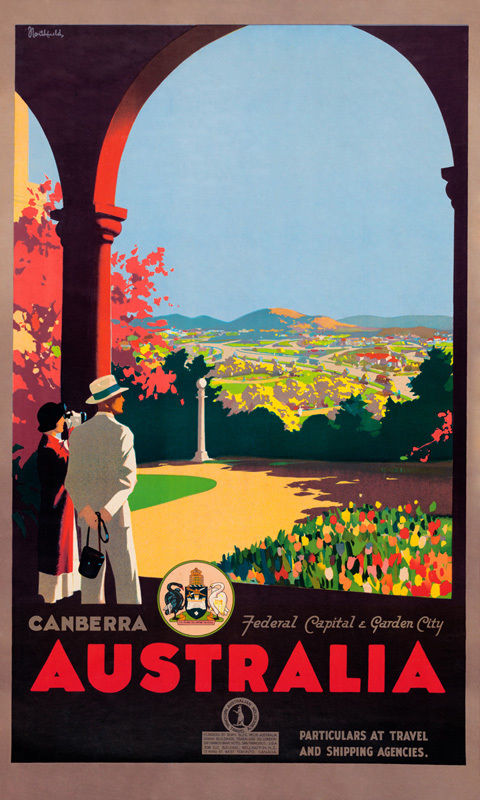
James Northfield’s ‘Canberra’, ca.1930

Just came across this amazing tourism poster for Canberra, printed in about 1930.

Canberra_poster

Everything I know about this image comes from page 44 of James Northfield and the art of selling Australia (2006) where the image is reproduced with the following caption: “On 31 August 1933 Charles Holmes, Director of the Australian National Travel Association, wrote to C.S. Daley who was then Civic Representative of the Department of the Interior, Canberra. Holmes was replying to Daley’s request for ways of popularising Canberra as a tourist resort amongst Australians. Holmes […] mentioned that he had arranged for James Northfield, whom he considered ‘one of the leading commercial artists in Australia’, to pay a visit to Canberra with a veiw to producing a poster which would be circulated ‘throughout the English speaking world'”.

What fascinates me is the way it captures the early utopian vision for Canberra a style that is more directly associated with European pre-war art and propaganda. There are traces here of Metropolis, German Expressionism and Italian Futurism except the vision that is being sold is of a civilised pastoral metropolis, as opposed to a dynamic techno-utopia.

And interestingly this is still how Canberra is represented today: a ‘bush capital’ marked out by imposing civil institutions.


Standard
Uncategorized

The Australian PhD Prize for Innovations in Linguistics

Screen shot 2014-05-12 at 1.29.26 PMI have just received notification that I am this year’s winner of the the Australian PhD Prize for Innovations in Linguistics! Feeling very pleased with myself.

Piers Kelly is the winner of the second Australian PhD Prize for Innovations in Linguistics for his thesis entitled ‘The word made flesh: An ethnographic history of Eskayan, a utopian language and script in the southern Philippines’. The thesis was submitted to ANU in December 2012 and was an outstanding piece of innovative and creative linguistic scholarship.

The Australian PhD Prize for Innovations in Linguistics is a $500 prize awarded to the best PhD (judged by the Panel) which demonstrates methodological and theoretical innovations in Australian linguistics (e.g. studies in toponymy, language and ethnography, language and musicology, linguistic ecology, language identity and self, kinship relationships, island languages, spatial descriptions in language, Australian creoles, and language contact.).

A lite version of my thesis (abstract-contents-intro) can be downloaded here.


Standard