What I'm reading

The best ethnographies, as judged by ANU anthro students

When I was new to anthropology I really wanted some kind of ‘best of’ list of ethnographies to get me started. For the most part when I asked anthropologists to tell what work had influenced them the most, they had to stop and think about it or they gave equivocal answers.

So I’m pleased to circulate a recently drafted ‘best of’ list produced by anthropology students at the Australian National University. I am not endorsing the list, but simply making it available. ( If you’re curious to know what my favourite ethnographies are, see this post here.)

It’s encouraging that so many were published in the last fifteen years. Perhaps this is a sign of intellectual progress and generational change within the discipline.

Here it is, with thanks to Shiori Shakuto and the Anthropgrad list:

Abu-Lughod, Lila 1986. Veiled Sentiments: Honour and Poetry in a Bedouin Society. Berkeley: University of California Press.

Allison, Anne 1994. Nightwork: Sexuality, Pleasure, and Corporate Masculinity in a Tokyo Hostess Club. Chicago: University of Chicago Press.

Anderson, Benedict 1991. Imagined Communities: Reflections on the Origin and Spread of Nationalism. New York: Verso.

Bourgois, Phillipe 2002. In Search of Respect: Selling Crack in El Barrio. Cambridge University Press.

Bourgois, Phillipe and Schonberg, Jeffrey 2009. Righteous Dopefiend. University of California Press.

Casaro, M Christina 2007. ‘Polo, Laughman, So Say: Situating Uyghur Food between Central Asia and China’. In Beller-Hann et al (eds) Situating the Uyghurs between China and Central Asia. Ashgate.

Gammeltoft, Tine 2014. Haunting Images: A Cultural Account of Selective Reproduction in Vietnam. Berkeley, University of California Press.

Golub, Alex 2014. Leviathans at the Gold Mine: Creating Indigenous and Corporate Actors in Papua New Guinea. Duke University Press.

Gordillo, Gaston R. 2014. Rubble: The Afterlife of Destruction. Duke University Press.

Graeber, David 2009. Direct Action: An Ethnography. AK Press.

Gupta, Akhil 2012. Red Tape: Bureaucracy, Structural Violence, and Poverty in India. Duke University Press.

Ho, Karen 2009. Liquidated: An Ethnography of Wall Street. Durham: Duke University Press.

Ingold, Tim 2007. Lines: A Brief History. Routledge.

Kohn, Eduardo 2013. How Forests Think: Toward an Anthropology beyond the Human. Berkeley, University of California Press.

Lea, Tess 2008. Bureaucrats and Bleeding Hearts: Indigenous Health in Northern Australia. UNSW Press.

Lora-Wainwright, Anna 2013. Fighting for Breath: Living Morally and Dying of Cancer in a Chinese Village. University of Hawaii Press.

Margold, Jane 1995. ‘Narratives of Masculinity and Transnational Migration: Filipino Workers in the Middle East’. In Ong, Aihwa and Peletz, Michael (eds). Bewitching Women, Pious Men: Gender and Body Politics in Southeast Asia. University of California Press.

Messick, Brinkley 1996. The Calligraphic State: Textual Domination and History in a Muslim Society. University of California Press.

Miller, Daniel 2008. The Comfort of Things. Polity Press.

Mueggler, Erik. 2001. The Age of Wild Ghosts: Memory, Violence, and Place in Southwest China. Uiversity of California Press.

Najmabadi, Afsaneh 2013. Professing Selves: Transsexuality and Same-sex Desire in Contemporary Iran. Durham, Duke University Press.

Paxson, Heather 2013. The Life of Cheese: Crafting Food and Value in America. Berkeley: University of California Press.

Scheper-Hughes, Nancy 1992. Death without Weeping: The Violence of Everyday Life in Brazil. Berkeley: University of California Press.

Trawick, Margaret 1992. Notes on Love in a Tamil Family. University of California Press.

Tsing, Anna Lawenhaupt 2005. Friction: An Ethnography of Global Connection. Princeton University Press.

Turner, Victor 1970. The Forest of Symbols: Aspects of Ndembu Ritual. Ithaca: Cornell University Press.

Vankatesh, Sudhir 2014. Floating City: A Rogue Sociologist Lost and Found in New York’s Underground Economy. Penguin Press.

Wacquant, Loic, 2007. Body & Soul: Notebooks of an Apprentice Boxer. Oxford University Press.

Wardlow, Holly 2006. Wayward Women: Sexuality and Agency in a New Guinea Society. University of California Press.

Standard
Just published

Dork of the dead

I have a thing in The Conversation on representations of anthropologists in cinema. An excerpt:

Anthropologists have a unique expertise that allows them to mediate between worlds, and this turns out to be a useful skill set in the event of a zombie apocalypse or an exorcism gone wrong.

Scholars of cultural diversity serve as convenient plot devices for explaining the unexplainable to the viewing audience and helping the hero make better decisions. Just like the ingenious nerd who knows how to repair a wrecked spaceship or delve into a government mainframe, so too fictional anthropologists are available to “hack” the behaviour of otherworldly actors.

Read it here.

Standard
Uncategorized

Litterae non dant panem

I came across an apt Latin proverb today: Litterae non dant panem, meaning “Letters do not give bread”.

The earliest reference I can find for it is Horace (65 BCE to 8 BCE) and it is usually interpreted to mean that writing poetry or literature is no way to sustain yourself. I would assume that it holds for a narrower reading of “letters” in the study of writing systems and literacy, and for a broader interpretation of humanities research, or Letters.

It calls to mind a much more recent proverb from Alain de Botton: “Trying to make a living from writing is like attempting to power a city from wind turbines”.

The Romans knew it, the Carthaginians knew it, and now we know it.


Standard
Collection fishing, Writing systems

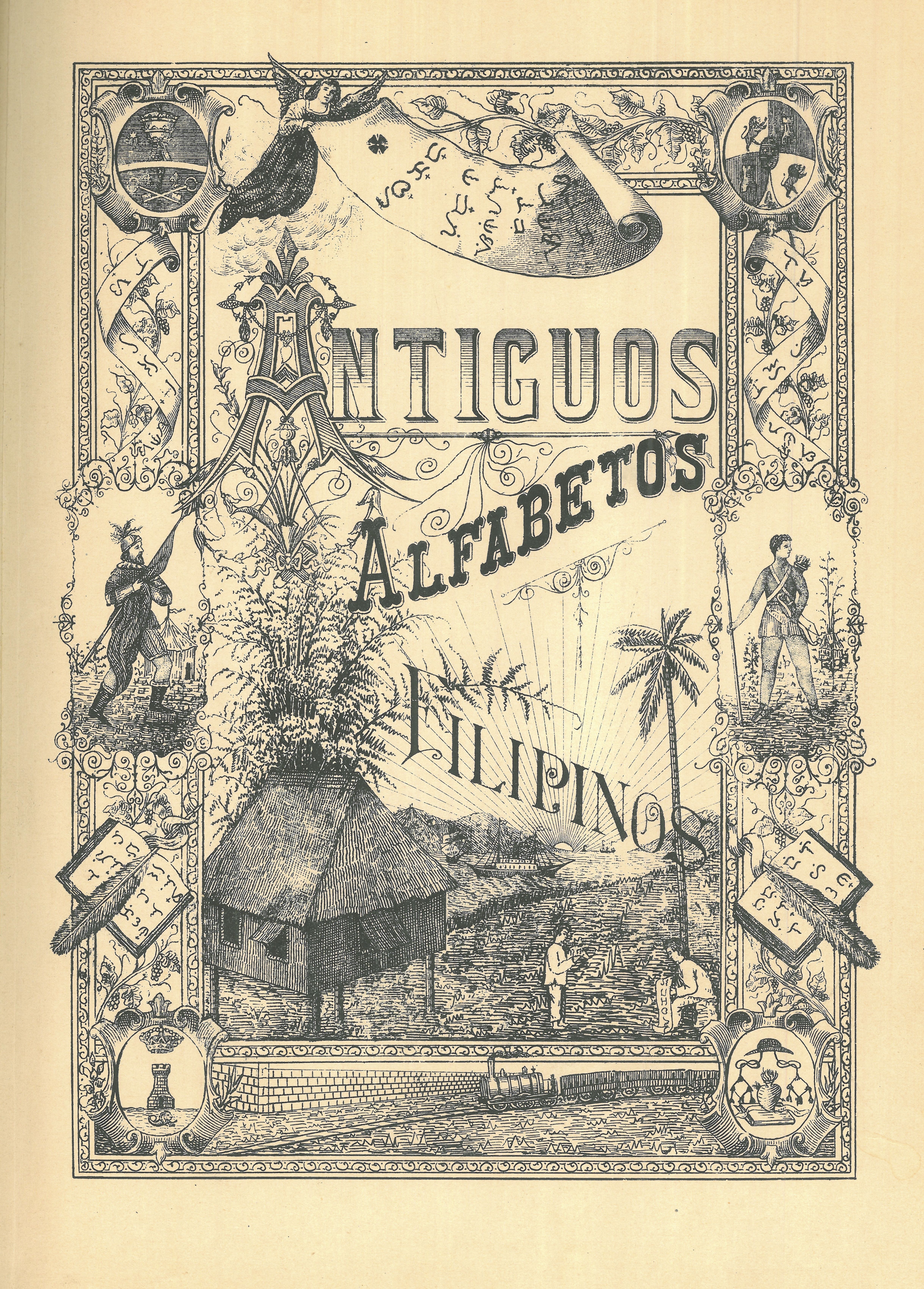
Marcilla y Martin’s ‘Estudio de los antiguos alfabetos filipinos’

I doubt that there is any other library in the world that will let any old schmo handle a rare 120-year-old document and go and scan it using the library’s own equipment.

If WorldCat is to be believed, there are only six copies of Marcilla y Martin’s 1895  Estudio de los antiguos alfabetos filipinos (Malabon: Tipo-litografia del asilo de huérfanos) in public archives worldwide. One of these is in the National Library of Australia.

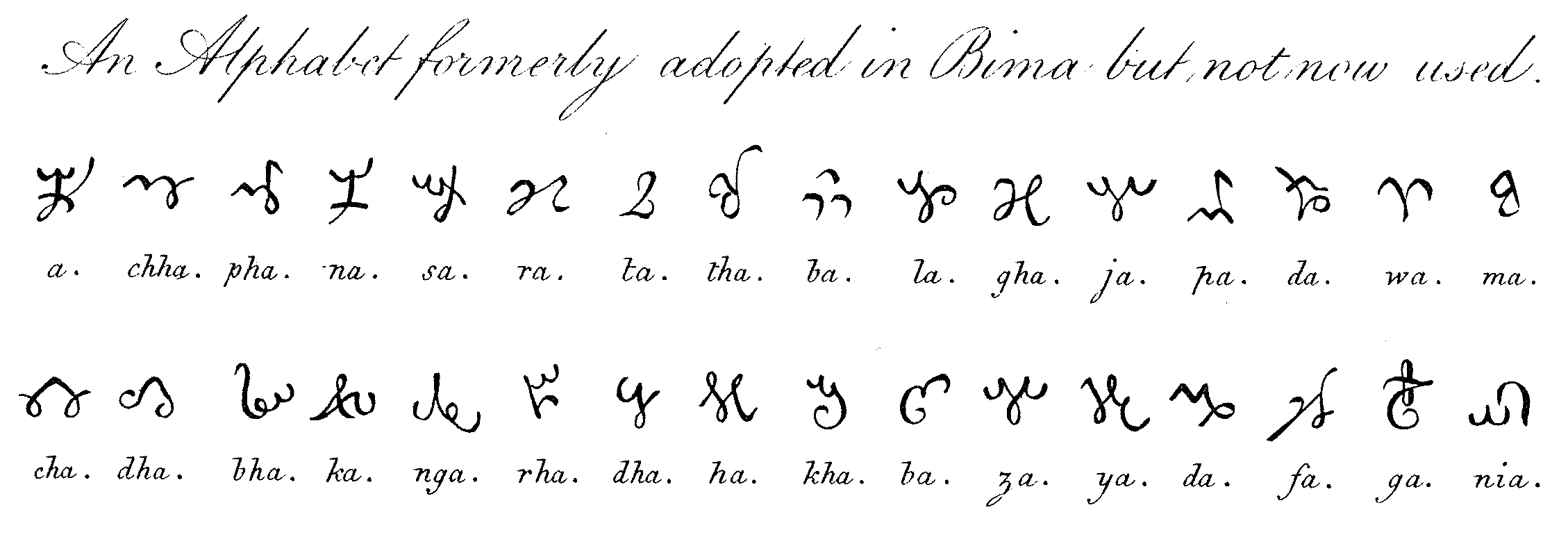
Yesterday I scanned just a couple of high-resolution pages, including the brilliant frontispiece. The text of this volume is actually fairly unenlightening – grammatologists should not expect any grand insights – but the typesetting and illustrations are brills. In an earlier version of this post I extended my admiration to the reproductions of Philippine letter shapes – Chris Miller has informed me that they are actually serious distortions!

Marcilla y Martin frontispiece for Estudio de los antiguos alfabetos filipinos (1895)

Frontispiece for Marcilla y Martin’s Estudio de los antiguos alfabetos filipinos (1895)

Cuadros for script samples in Marcilla y Martin's Estudios de los antiguos alfabetos filipinos (1895)

Cuadros for script samples in Marcilla y Martin’s Estudio de los antiguos alfabetos filipinos (1895)

Standard
What I'm reading

The politics of imagination

I’ve often thought that the very worst clichés beloved of highschool English teachers are ‘Write from your experience’, followed closely by, ‘An argument always has two sides’. This is the perfect one-two punch: stifle the imagination then stamp out any residual feeling for nuance. Of course, there is nothing wrong with writing about what you know, and occasionally arguments do have two sides as opposed to three or seventy or just one. The problem arises when these ideas are formalised into ethical principles.

Against this, a recent article by Aminatta Forna is the best defence of the imagination that I have read in years. It also serves as a literary rebuke to the politics of identity taken to extremes, where well-meaning efforts to be ‘inclusive’ of minority perspectives and create ‘safe’ discourses end up essentialising those perspectives to the point where individual experience is erased. I’m going to quote from it below, but go and read the whole thing if you have time.

Some years ago I was invited to speak at Oxford University, and I was perhaps naively surprised to find my book taught by the African studies department and nobody from the department of English literature in attendance at my talk. Everyone in the audience was an Africanist.

[…]

All this classifying, it seems to me, is the very antithesis of literature. The way of literature is to seek universality. Writers try to reach beyond those things that divide us: culture, class, gender, race. Given the chance, we would resist classification. I have never met a writer who wishes to be described as a female writer, gay writer, black writer, Asian writer or African writer. We hyphenated writers complain about the privilege accorded to the white male writer, he who dominates the western canon and is the only one called simply “writer”.

[…]

So where should a bookshop shelve a novel set in Croatia and written in English by a Scottish Sierra Leonian author? Over the years I have posed the question of classification to many writers about their own work and the answer is invariably the same: in bookshops, fiction should be arranged in alphabetical order.

[…]

Writers do not write about places, they write about people who happen to live in those places. This is something that the labellers and their labels don’t understand either. Achebe did not “write about” Africa, he wrote about people who happen to live in Igboland. Likewise, I do not “write about” Sierra Leone or Croatia, those places are the settings for my characters.

[…]

The Pakistani-British writer Kamila Shamsie, whose novel Burnt Shadows featured a Japanese character, agreed: “It’s about authenticity. When I was at uni in America in the 90s there was a lot of criticism around the idea of ‘appropriating’ other people’s stories. What started as a thoughtful post-colonial critique of certain types of imperial texts somehow became a peculiar orthodoxy that essentially denies the possibility of imaginative engagement with anyone outside your little circle.”

[…]

At question time a woman raised her hand and asked how I felt about writing characters “who have experiences different from your own”. I answered that all my characters had experiences different from my own and though it was generally assumed by western critics that I had a great deal in common with my west African characters, I had never in fact been an 80-year-old peasant woman, a university dean or a surgeon. I remarked that while this kind of anxiety seemed to focus on writing outside one’s own ethnicity or gender, class was often overlooked and by far the most challenging in my experience. My male characters were for the most part middle class and middle-aged, like me, but to write a peasant woman born at the turn of the century, to imagine what it might be like never to have read a book or seen a film, I found the toughest act of all.

[…]

A novel is a work of imagination, it is not a dissertation. When a writer writes a book, he or she makes a pact with the reader. For a writer of non-fiction the contract is clear. The author pertains to objectivity. The reader may rely on the facts contained therein, the writer promises (to the best of their ability) to provide a factual truth. A writer of fiction makes no such promises. Fiction is subjective: it comes from within the writer, and, not only that, the story itself is composed of a sequence of lies. The writer of fiction says to the reader only this: come with me on a journey of the imagination and I will try to show you something you have not seen before. This is the gift of the writer to the reader. The reader’s gift is to bring to this alchemy their own imagination and their own experiences.

Her article puts me in mind of the outrageous art of Yinka Shonibare, who was once advised at the beginning of his career to take inspiration from his ‘own culture’. Largely raised in a British context Shonibare began draping his work in bright Dutch-manufactured African textiles. My favourite sculpture of his is ‘How to blow up two heads at once’ (2006):

shonibare

There is always something dangerous about the art and its capacity for subversion and ambiguity. To foreground Shonibare as ‘Nigerian’, ‘British’ or ‘disabled’ (he is all of those things) strikes me as exercise in making his work intelligible, controllable and ultimately less exciting.

The value of Roland Barthes’ manifesto ‘The Death of the Author’ (1967) was that it provided a timely corrective to a culture in which writers were given full authority on the ‘true’ interpretation of their work, a tradition that lives on in boring Writers Festival questions like “So how much of yourself did you put into your characters?”.

That is not to say that the author’s experience is irrelevant, it’s just that any interpretation that treats biography as the primary frame of reference is putting the cart before the horse. There is an implication that we enlightened consumers of art can somehow know the contours of the artist’s experience ahead of schedule by extrapolating from the categories we ourselves assigned to them. The author is alive and kicking. It’s our idea of what it means to be an author that needs to die.

On the other hand, I’m not willing to take Forna’s ideal of the transcendant imagination at face value. One of the things I love about the New Philology is that it brings good old ethnography back into textual criticism. If, after all, an anthropologist is obliged to ask basket weavers in Central America about their experience and sources of inspiration, then why can’t don’t we ask Salman Rushdie, or indeed Aminatta Forna? Books, like baskets and sandwiches, are also cultural artefacts produced by people with intention. Ultimately this means that authors deserve to have the particularities of their experience recognised but it also means that they cannot be absolved of responsibility when they use their imaginations to inhabit the experience of others. Thomas Kenneally said that if he were to write The chant of Jimmie Blacksmith (1972)  today he would not have been so presumptuous to write it from an Aboriginal perspective. This is both a political and an aesthetic decision. To ventriloquise and exoticise does not always necessarily make you a ‘bad person’. It does make you bad at imagining.

The imagination is not a transcendent space, but perhaps its necessary to believe that in order to write at all. As Forna put it to her students: write what you want but write it well.

Standard
What I'm reading

The research academic as entrepeneur

I have been reflecting recently that research academics are in a similar predicament to musicians: there is no ‘middle class’ for either group. Either you are part of the majority struggling at the bottom from gig to gig, or you are straight-up famous.

Of course, there are significant differences too. Musicians are mostly operating in a market economy, while research is still largely done within a patronage model. But it’s clear that academia is becoming more market-based with the end of permanent positions coinciding with weird innovations like crowd-funded research and three-minute presentations. We are increasingly expected to be spruikers of our own brand and to perform labour in exchange for social capital as opposed to, you know, grubby old money. (Read especially everything by Sarah Kendzior on the adjunct crisis as well as relevant readings listed towards the bottom of this post).

There are no doubt problems with the old model as well as potential advantages with the new. Patronage offers security and dignity but had a funny way of institutionalising anti-meritocratic hierarchies. (Among other things, late-career researchers are almost exclusively male, and not always as productive and collaborative as might be hoped.) The neoliberal academy, on the other hand, is at least closer in its structure to the ‘real world’, meaning that if we want to change the way things are going we can count on having allies in other industries who feel our pain. They may even have the imagination to suggest ways of doing things that didn’t occur to us.

Above all, an accurate diagnosis of our situation as researchers—and our particular place within a wider context of social and industrial change—is certainly going to be more important than justified-but-futile whingeing. We don’t have to accept the status quo, but we are obliged to understand it.

This brings me to a fantastic article that appeared in The Atlantic recently: William Deresiewicz’s insightful and non-ranty,  ‘The Death of the Artist—and the Birth of the Creative Entrepreneur‘. Lot’s of parallels here to the research sector.

Professionalism represents a compromise formation, midway between the sacred and the secular. A profession is not a vocation, in the older sense of a “calling,” but it also isn’t just a job; something of the priestly clings to it. Against the values of the market, the artist, like other professionals, maintained a countervailing set of standards and ideals—beauty, rigor, truth—inherited from the previous paradigm. Institutions served to mediate the difference, to cushion artists, ideologically, economically, and psychologically, from the full force of the marketplace.

[…]

The institutions that have undergirded the existing system are contracting or disintegrating. Professors are becoming adjuncts. Employees are becoming independent contractors (or unpaid interns). Everyone is in a budget squeeze: downsizing, outsourcing, merging, or collapsing. Now we’re all supposed to be our own boss, our own business: our own agent; our own label; our own marketing, production, and accounting departments. Entrepreneurialism is being sold to us as an opportunity. It is, by and large, a necessity. Everybody understands by now that nobody can count on a job.

Still, it also is an opportunity.

Standard
What I'm reading

Best journalism of 2014

Another year, another round-up of things I read online that I found amusing, though-provoking, challenging to my world view or simply validating of my smug sense of being right about everything. As with last year’s list, a piece will make the cut if I’m still thinking about it the next day (even if I’m thinking about it angrily). Some pieces are included simply because I enjoyed the writing style. The stand out publications for 2014 are The Appendix and Aeon.

This year I’ve introduced categories to make it easier for readers to ignore what they know is unlikely to interest them. The categories are fairly arbitrary but they have the advantage of showing up my biases. (Who would have thought I was such a cynic to have a whole category dedicated to the best writing on ‘nerd hubris’, and another for ‘activist hubris’? Alert: I do not think believe activism or nerdery is inherently hubristic.)

And if you only read two things from this list, make them:

  •  Andrew O’Hagan’s Ghosting: Julian Assange (London Review of Books, 6 March 2014). This is a superb piece of work from a brilliant writer who was commissioned to produce a biography of a narcissist and failed. The story of the failure becomes an eloquent biography in its own right.
  • Gene Weingarten’s The Peekaboo Paradox (The Washington Post, 22 January 2006). Technically not published in 2014, but this is when I read it. I enjoyed this piece because it reads like a fine piece of fiction.

Best writing on journalism and publishing for 2014

Best writing by or about writers and writing

Best writing on politics

Best writing on wealth inequality

Best historical writing

Best ethnographic and travel writing

Best writing on ethics and the examined life

Best writing on nerd hubris

Best writing on activist hubris

Best writing on children and parents

Best writing on sex

Most amusing writing (and photographs)

Best writing on feminism

Best writing on education and academia

Best writing on science

Best writing on language

Standard
Stuff I'm archiving

Depositor’s Diary: The Castañares Manuscript

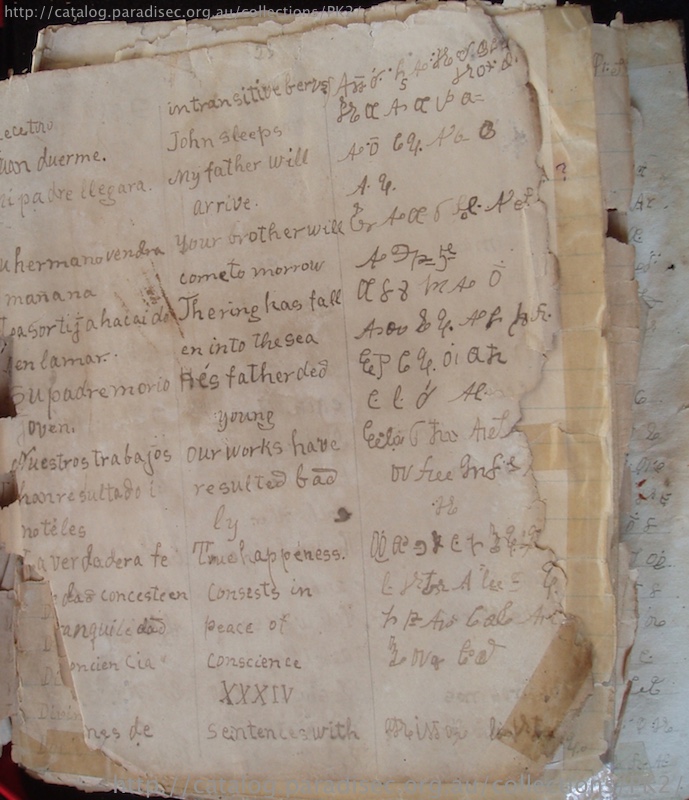
I am in the process of archiving all significant materials that I scanned, photographed or recorded in Bohol on various visits between 2005 and 2011. Archiving is a seriously time-intensive activity but there is genuine relief to be found in assembling hundreds of items from stray hard drives and depositing them for posterity. Call it ‘research closure’. To mark the stages of my progress I intend to do a regular post showcasing a favourite item. Today, I am introducing the Castañares Manuscript, an extraordinary handwritten document of unknown provenance that used to be housed in the old Bohol Provincial Museum with no explanatory notes. An Eskaya teacher in Taytay suggested that it may have been penned by one Domingo Castañares which is why I refer to it as the Castañares Manuscript. In oral accounts Castañares was one of the chief scribes of Mariano Datahan and church records indicate that he was born in 1912 and died in 1985. His occupation is given as ‘farmer’. Whoever wrote it, it is likely that the scribe was more competent in Spanish than English on the basis of the frequency of copying errors in the English text. The 108 page document is fragmentary and comprises a partial trilingual Spanish–English–Eskayan dictionary with phrases, Visayan language explanations of Spanish grammar, and the text of a Visayan catechism translated into Eskayan. The only ‘original’ text in the document is the material that is in Eskayan; the remainder has been copied from at least three separate published sources. My best guess is that the original source text was a Spanish-era school book for teaching Spanish to Visayan speakers. After the arrival of American teachers in 1900, Visayan-Spanish textbooks were modified and republished to include an English column. The practice of modifying Spanish textbooks is specifically attested in Bohol. Later, it would appear that an Eskaya scribe recopied one of these modified textbooks into a notebook and replaced all Visayan text with Eskayan. The end result is a kind of palimpsest in which evidence of the two preceding texts is preserved.   OLYMPUS DIGITAL CAMERA   Continue reading

Standard
Just published

Of unicorns and winged pigs

I have a new(ish) article out in Lumina: a journal of the southern Philippines. This issue is something of a small miracle. In the course of producing it, the editors had to deal with two natural disasters: after Bohol’s earthquake their office was condemned as unsafe, then typoon Haiyan took out their electricity and servers. So everyone else can stop whingeing about the trials of academic publishing for a moment!

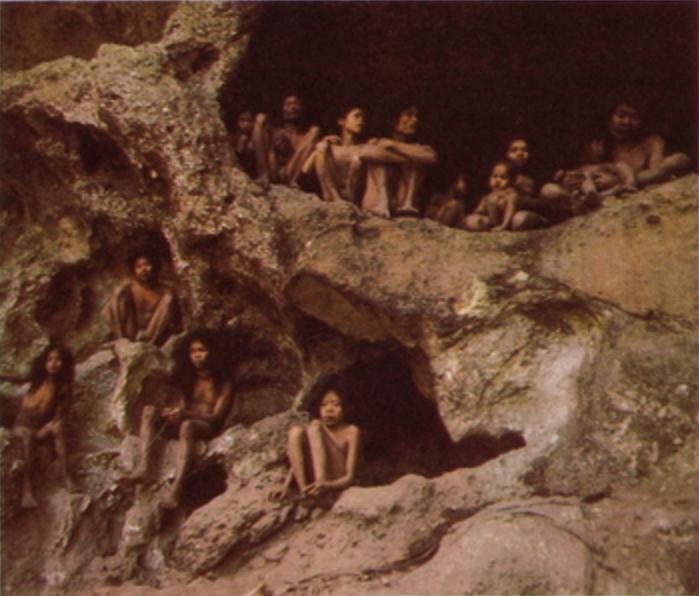
She went on to reveal a deep secret intimated to her by the head Eskaya teacher which she had promised to conceal under solemn oath, an oath she would now ‘have to violate for the sake of Science’. Somewhere in the mountains of Bohol was the lost City of the Sun where the world’s destiny was controlled by three judges, and goods could be obtained cheaply by all. The site of the city could not yet be disclosed since the world was about to be renewed. Far from merely reporting ethnographic details from local folklore, Abregana presented thiFig1-Tasadays information as a series of stand-alone facts for the urgent attention of the governor.

Talk of unicorns and winged pigs may not necessarily have been beyond the pale for the fantastical realm of Visayan tabloids, but some of those who knew her recall that in this period her grasp of reality was increasingly tenuous […]


Standard
Collection fishing

“The colour postcard in Tahiti: A documentary study”

From the private library of the late, great Darrell Tryon is this curious piece of obscure scholarship. Patrick O’Reilly’s 1978 La carte postale en couleaur a Tahiti: Étude documentaire (The colour postcard in Tahiti: A documentary study).

La carte postale a tahiti

It begins auspiciously:

Ayant passé jadis pas mal d’heures de loisir à rechercher et à découvrir des carte postales de Tahiti antérieures à la première guerre mondiales, lors d’un récent séjour dans l’île j’ai songé qu’il serait peut-être intéressant de récolter les carte postales qui feraient bonne figure dans les albums d’un membre du ‹‹Vieux Papier›› de l’année 2050 [sic: presumably 1950]. Pourquoi attendre que les chose deviennent rares avant de les recueillir?

Of the 966 lovingly collected colour postcards in O’Reilly’s collection, only eight are selected in this 19 page essay. All of them are mind-numbling dull – only two have some interest as campy kitsch Polynesiana: a dancer bedecked with flowers and a tasteful nude reclining in a pond. The caption for this one is “Vahine au bain – A en croire les carte postales, la vahine passe sa vie à pecher à ligne, et à jouer de la guitare, couronnée de fleurs.” And adding somewhat wistfully, “Autre est la réalité”.

Continue reading

Standard