
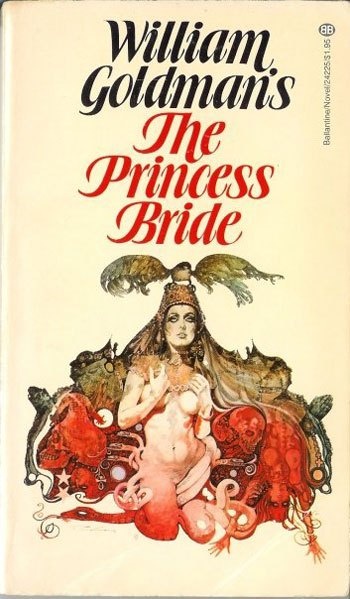
From today’s piece in The Guardian, ‘The five worst book covers ever‘.
I came across this outstanding paleograph sitting quietly in a glass case in the Archeology and Anthropology building of my university. The quality of the image is somewhat reduced due to the fact that I was pressing my phone against the pain. The caption reads ‘Easter Island rongorongo board with approx5 500 glyphs, collected in 1870.’

Easter Island rongorongo board with approx 500 glyphs, collected in 1870
According to the Wikipedia entry on Rongorongo, this artefact would represent one of only 26 known objects worldwide bearing a Rongorongo inscription. Considering that Easter Island may be the last place where writing was independently invented — after Central America, the Middle East and (perhaps) China — it’s remarkable that such a rare item is sitting casually amongst a collection of Austronesian and Southeast Asian sherds and flake tools.
Of course, the question of whether Rongorongo represents actual writing remains vexed as does the authenticity of many of the surviving artefacts. The meaning and traditional use of Rongorongo has tormented scholars from their earliest encounters with it. By the time examples of Rongorongo were being collected for analysis, no literate Easter Islanders remained and the wooden texts were being used for fishing spindles or being burned as firewood. If Rongorongo is writing, as we know it, there is no consensus as to what kind of system it represents or whether the glyphs are merely mnemonics for the oral reproduction of ritual speech.
The date of 1870 suggests that this specimen was collected on the O’Higgins scientific expedition to the island in which the famous Rongorongo text I was obtained. I contacted the person responsible for maintaining the exhibit who then contacted the original collector, the archeologist Professor Peter Bellwood who gave the following succinct and highly informative reply:
“I bought it in Santiago in 1975. If it wasn’t a replica it would be worth millions, and certainly not in that glass case! It is probably made of plaster of Paris – not to be dropped.”
Mystery solved.
Just came across this amazing tourism poster for Canberra, printed in about 1930.
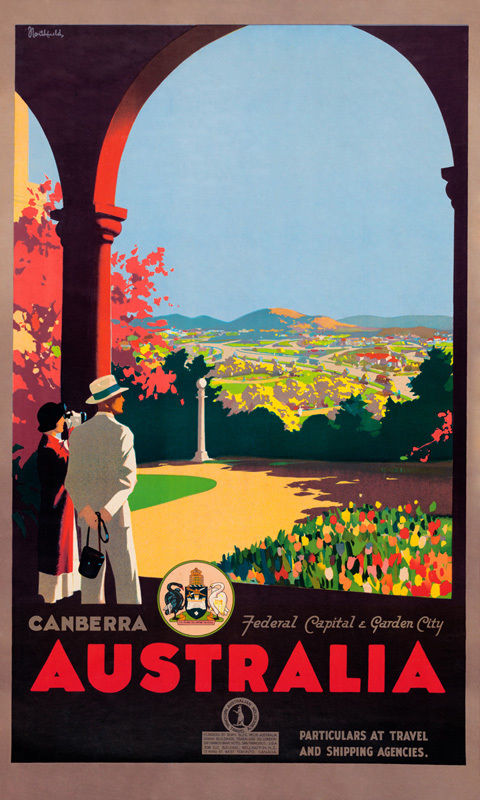
Everything I know about this image comes from page 44 of James Northfield and the art of selling Australia (2006) where the image is reproduced with the following caption: “On 31 August 1933 Charles Holmes, Director of the Australian National Travel Association, wrote to C.S. Daley who was then Civic Representative of the Department of the Interior, Canberra. Holmes was replying to Daley’s request for ways of popularising Canberra as a tourist resort amongst Australians. Holmes […] mentioned that he had arranged for James Northfield, whom he considered ‘one of the leading commercial artists in Australia’, to pay a visit to Canberra with a veiw to producing a poster which would be circulated ‘throughout the English speaking world'”.
What fascinates me is the way it captures the early utopian vision for Canberra a style that is more directly associated with European pre-war art and propaganda. There are traces here of Metropolis, German Expressionism and Italian Futurism except the vision that is being sold is of a civilised pastoral metropolis, as opposed to a dynamic techno-utopia.
And interestingly this is still how Canberra is represented today: a ‘bush capital’ marked out by imposing civil institutions.
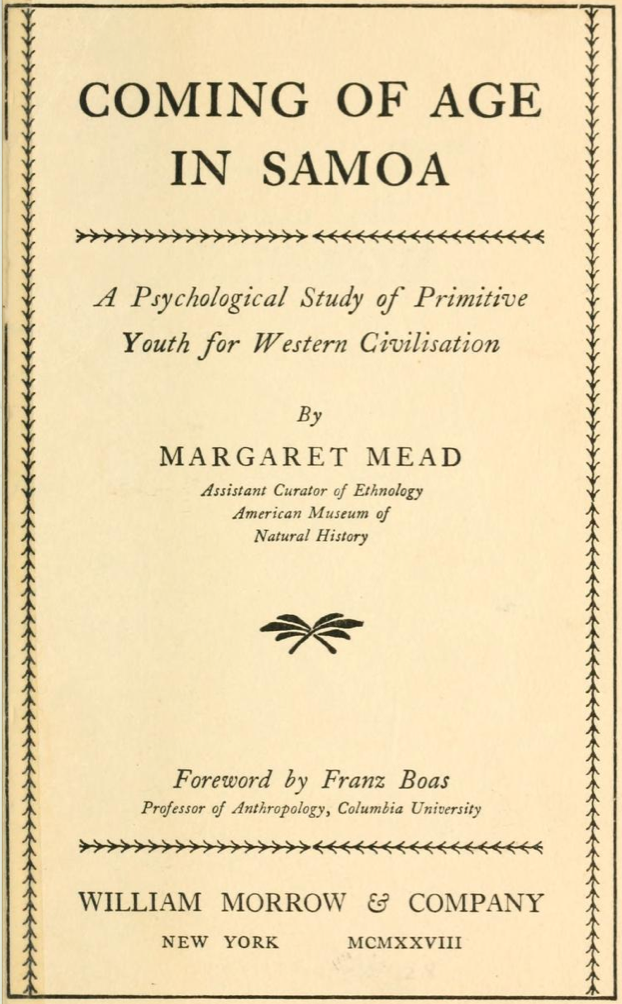
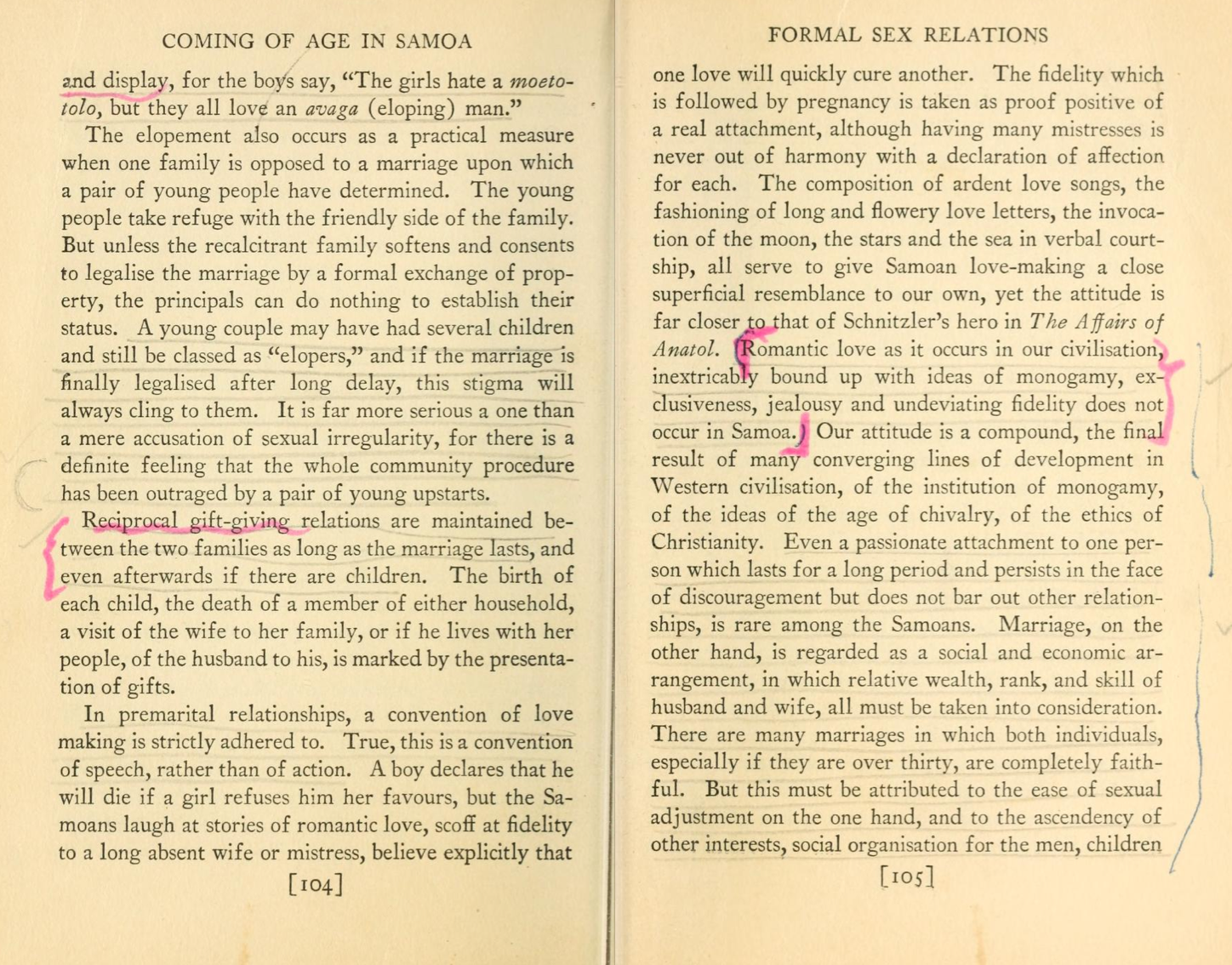
Recently posted to AASnet, a link to the first edition of the notorious Coming of age in Samoa (1928), now digitised by the University of California and available on the Internet Archive. This is a well-worn edition with lots of underlining and annotation by – presumably – numerous young scholars over the course of the twentieth century.

Here is a charmingly patronising prologue page to Philippine folklore stories, published in Boston in 1904. Given the date it was presumably intended as an English instructional aid for Thomasite teachers in the Philippines. Click the image to see the full text. The illustrations and typesetting are marvellous.

Canberra has the look and feel of a city that was constructed overnight in 1992. Without the juxtoposed old-and-new architecture of other Australian cities it’s rare to see anything to remind you that Canberra has existed for ten distinct decades. So I was pleased to come across this 1963 issue of Canberra Weekly for sale on ebay today. My favourite quotes come from the Teenage World section (image 5 below) where the young TV personality Rosalind Doig is profiled:
“Classical music and jazz are her favourites in the music field and she thinks Elvis is a boob […] Of Australian men, the thing she dislikes most is to see them leave their wives in the car, while they are in the bar drinking”
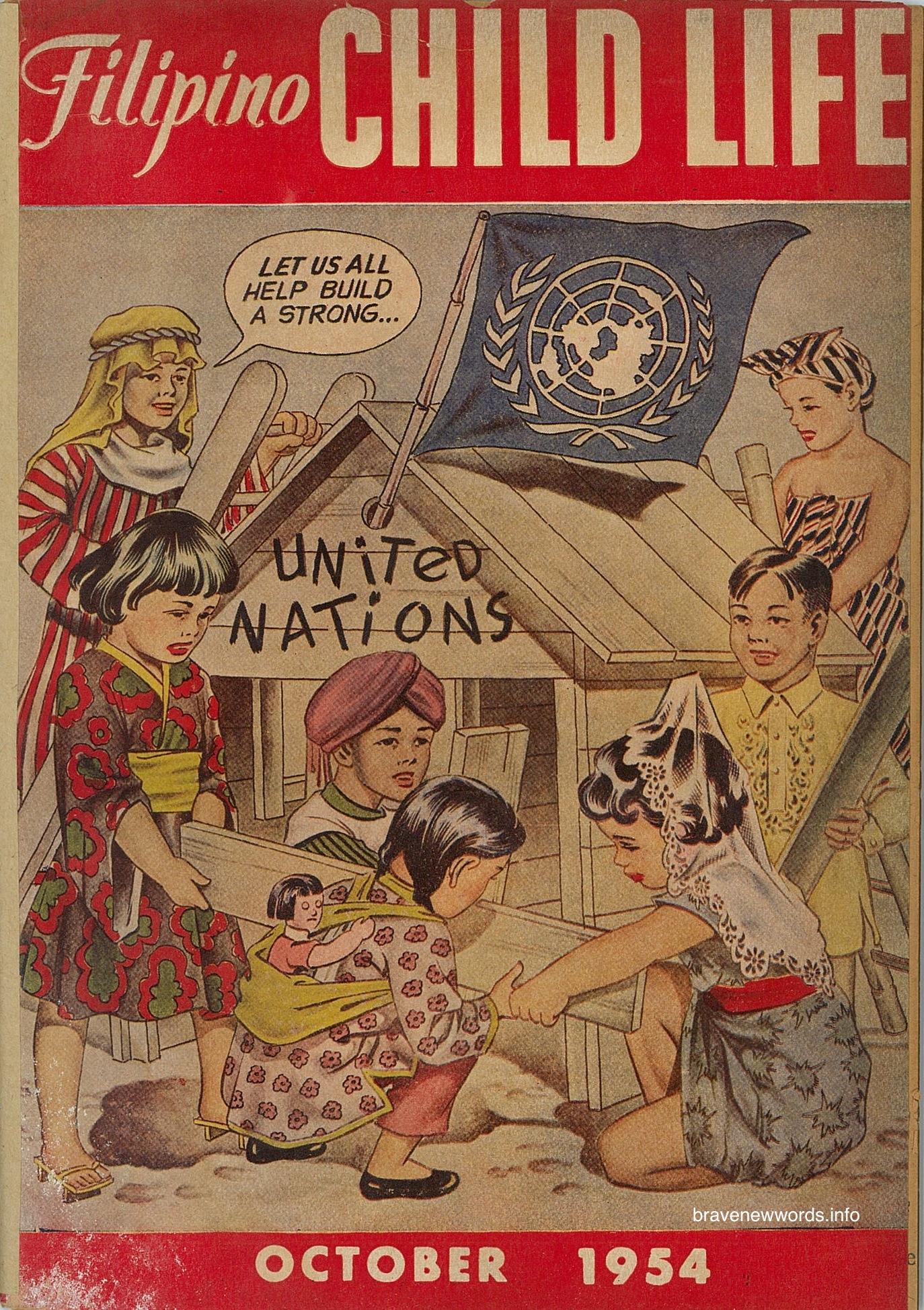
In preparation for archiving recordings with PARADISEC I’ve been doing a lot of tidying up. I came across this lovely magazine that I picked up in a Manila market some years ago.
January
February
March
April
May
June
July
August
September
October
November
December
And for the record, here are my favourites from 2012 and earlier, in no particular order:
2012 (and earlier)
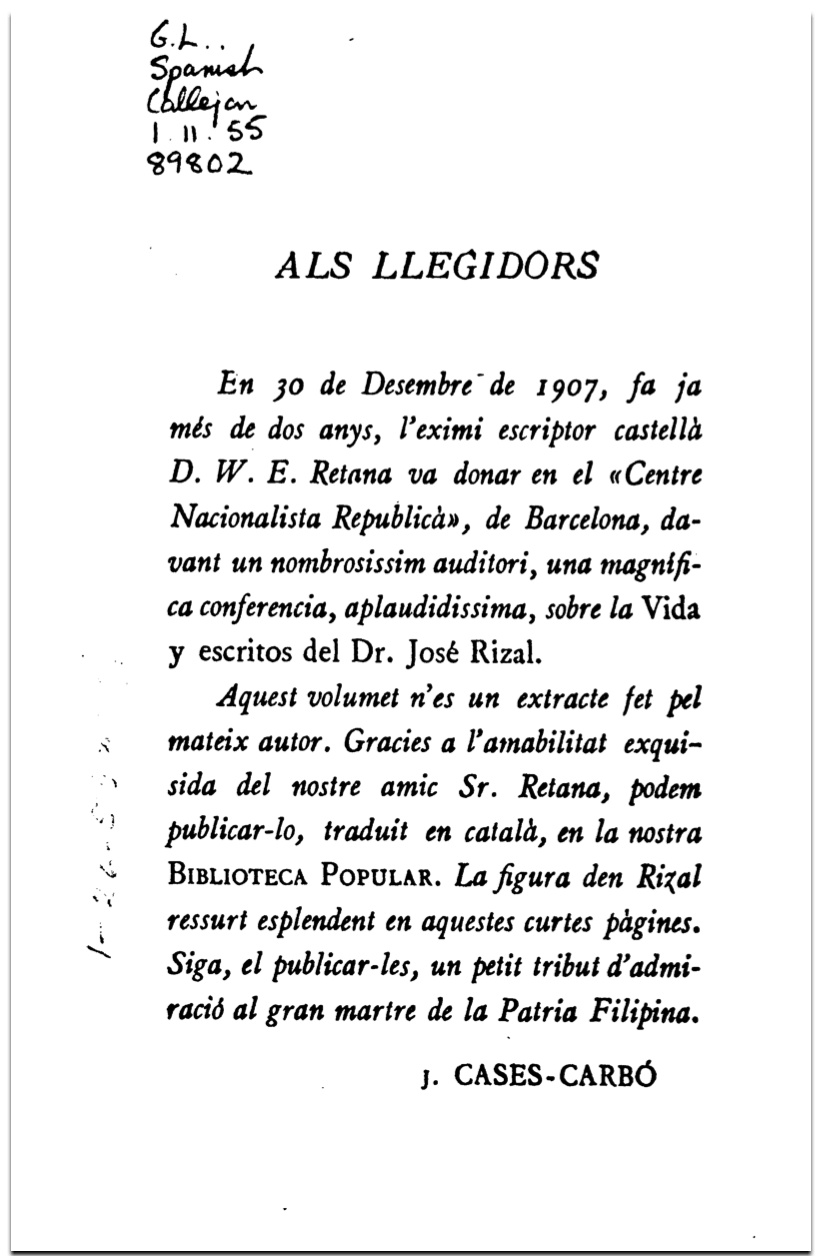
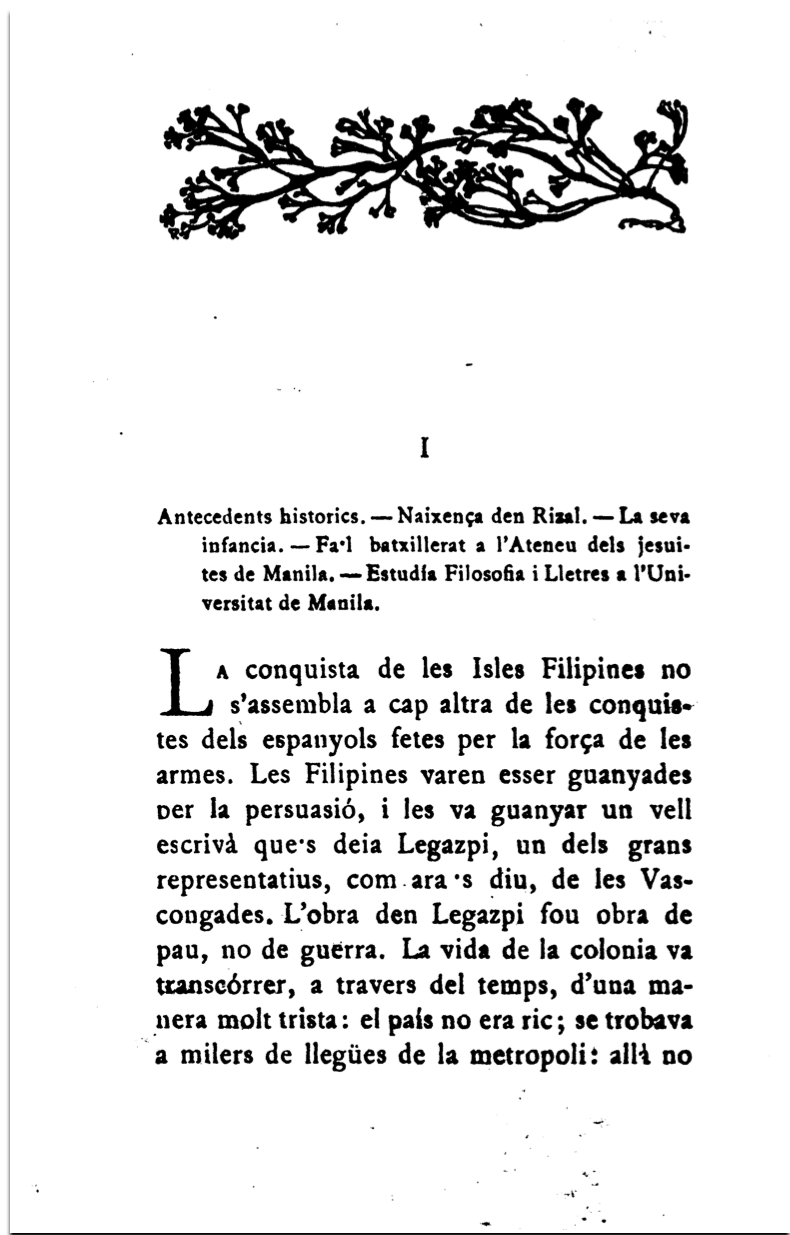
This morning’s serendipitous discovery in archive.org is Wenceslao Retana’s biography of Jose Rizal in Catalan(!!), translated from the Spanish in 1910, three years after it was first published. The book doesn’t seem to display properly in archive.org but the pdf is downloadable. Enjoy!


 Brave new words