
My policy on reviewing
Topics I can review
I am always happy to review relevant papers in the field of Philippine studies, Australian studies, linguistic anthropology and writing system research.
Topics I cannot review
I am unlikely to agree to review papers on grammar or applied linguistics, even if they intersect with languages that are familiar to me.
I am also unable to comment on the accuracy or applicability of statistical/computational models, even when applied to areas of my own disciplinary expertise. Numbers are not my strength! Likewise, I cannot review technical papers on LLMs.
I will not review papers if the authors cannot provide full datasets (see LLMs above).
If a paper I’m reviewing appears to have been assisted by an LLM I will reject it as fraudulent, unless authors can provide version controlled drafts to prove their authorship.
I have some understanding of (social) cognition and cultural evolution but it’s largely through my collaboration with other scholars who know much more. My own contribution to these fields tends to concern their philosophical dimensions, or the intellectual history of their development as fields of inquiry.
Mannheim Principles
Before deciding to review a paper I follow the Mannheim Principles and I will sometimes ask the editor(s):
a) Have you already read this paper?
b) Having read it, on what basis (in very general terms) do you consider that it deserves expert evaluation?
c) If it passes review by all reviewers, do you commit to publishing it?
In the event that there are negative or non-committal answers to any one of these questions, I will decline to review the paper. This is not to be rude. The Mannheim Principles are designed to prevent everyone’s time being wasted. If an editor sends a paper out for review without assessing it, this is a misuse of voluntary labour. Similarly, when papers pass review and yet are not published, this is also wasting the authors’ and reviewers’ time.
Predatory journals
On the whole predatory journals do not bother with peer-review in the first place, but occasionally I do get requests which I will block rather than respond to with a formal rejection. I classify a journal as predatory if its name or its publisher’s name appears on Beall’s list. I may also judge it to be predatory if it is all of the following: a) new on the scene, b) publishes work by authors who have not been published elsewhere, c) has an editor who has not published in the field, while d) also charging article processing fees. (Note that the first two criteria alone do not make a journal predatory.)
Other situations
Otherwise, there are only a few circumstances in which I will decline to review a paper: if it is beyond my expertise, if I have already reviewed an unusually high number within the year, if I have already reviewed several papers by the same author, if the author/editor does not provide access to the data that the paper relies on.
I will not review papers in journals owned by Elsevier, unless the publisher commits to releasing the paper (if passed) as full open access at no cost to the author or the author’s institution.
Anonymity
I stand by my review comments so I’m happy to be identified by name to the author at the editors’ discretion.
My policy on reviewing ARC grants
The ARC system is in dire need of reform. I endorse the process proposed by Nick Enfield, and above all the cheap reforms proposed by many academics, summarised by ARC Tracker here.
ARC grant-holders are contractually obliged to review up to 20 grants per annum! To do this effectively they would be doing nothing but reviewing grants while neglecting their own grant to which they also have contractual obligations. This is clearly not workable. I will review half this amount, after factoring in my FTE level. Needless to say, any project that strays from my FoR codes will not be accepted.
I will not review projects submitted by any investigator with credible allegations of misconduct against them from colleagues or students. This is not an ideal or principled stance since I realise that it simply becomes someone else’s problem. However, having reliable knowledge of unethical behaviour means that I will be unable to produce an unprejudiced review. See ‘Conflicts of interest’ below.
For the record, my ANZSRC2020 FoR (Field of Research) codes are:
440105 Linguistic anthropology
450606 Aboriginal and Torres Strait Islander information and knowledge systems
450105 Aboriginal and Torres Strait Islander curatorial, archives and museum studies
and to a lesser extent
450502 Aboriginal and Torres Strait Islander anthropology
479999 Other language, communication and culture not elsewhere classified [ie, writing systems and graphic codes]
SEO codes are:
130703 Understanding Australia’s past
210401 Aboriginal and Torres Strait Islander artefacts
210403 Aboriginal and Torres Strait Islander customary practices
210404 Aboriginal and Torres Strait Islander knowledge
130701 Understanding Africa’s past
130702 Understanding Asia’s past
Conflicts of interest
I will reject any invitation to review (for a grant, paper, chapter, monograph etc) if there is a conflict of interest. My personal definition of a conflict of interest will always align with that provided by the Australian Research Council. This will generally be consistent with the definition set out in the policy documents of the publisher or grant body.
My policy on being reviewed
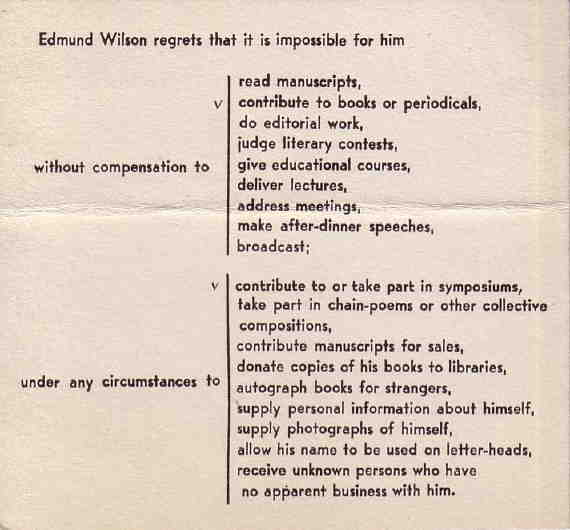
I will never waste anyone’s time by submitting a paper or grant application that I believe to be sub-standard. So if it turns out that the work that you’re editing or reviewing is objectively terrible, that’s because I’m a terrible scholar, not a terrible person. Please assume good faith and take licence to be as critical as possible.
I will address all peer revisions, or give full explanations as to why I haven’t in a given instance. After peer revisions have been satisfactorily incorporated into the draft, I am happy to make further necessary editorial changes but on ethical grounds I will not modify core content or analysis because these requested changes will not have been assessed by reviewers.
My position on peer-review models
Peer review is by no means perfect, but I believe the best model available is the group-consolidated method promoted by eLife that addresses two of the biggest drawbacks of classical models: pace of review and quality control. You can read about the eLife review process here. I’m also very much in favour of post-publication peer review.
 Brave new words